Understanding the Construction Drone Market
Construction site mapping has emerged as one of the most consistent and lucrative applications for commercial drone services. General contractors, civil engineering firms, and project managers increasingly rely on drone-generated data for progress monitoring, volumetric calculations, and site documentation. For Part 107 pilots, construction work offers regular clients, predictable schedules, and clear deliverable requirements.
The construction industry’s adoption of drone technology continues accelerating as project managers recognize the value of accurate, timely aerial data. A single drone flight can capture information that would take a survey crew days to collect manually, at a fraction of the cost. This efficiency translates directly into competitive advantages for contractors who embrace the technology.
Construction Drone Applications
Drone services for construction span the entire project lifecycle, from pre-construction site surveys through final as-built documentation. Understanding these applications helps pilots position their services effectively and communicate value to potential clients.
Pre-construction surveys establish baseline conditions, document existing site features, and support initial planning. These flights capture topographic data used for earthwork calculations, drainage design, and construction planning. Marketing surveys also help contractors prepare accurate bids by documenting site conditions before work begins.
During active construction, progress monitoring flights document work completion at regular intervals, typically weekly or monthly. This documentation supports project management, helps identify scheduling issues, and creates a permanent record of construction progression. Time-lapse compilations from these flights make compelling marketing materials for contractors.
Volumetric surveys calculate stockpile quantities for materials like gravel, sand, and fill dirt. Accurate volume measurements support inventory management and billing verification. Compared to traditional survey methods, drone-based volumetrics deliver results faster and often more accurately, especially for irregular stockpile shapes.
Deliverables Contractors Expect
Understanding what deliverables contractors need helps you price services appropriately and set clear expectations. Different projects require different outputs, so discuss requirements thoroughly before quoting work.
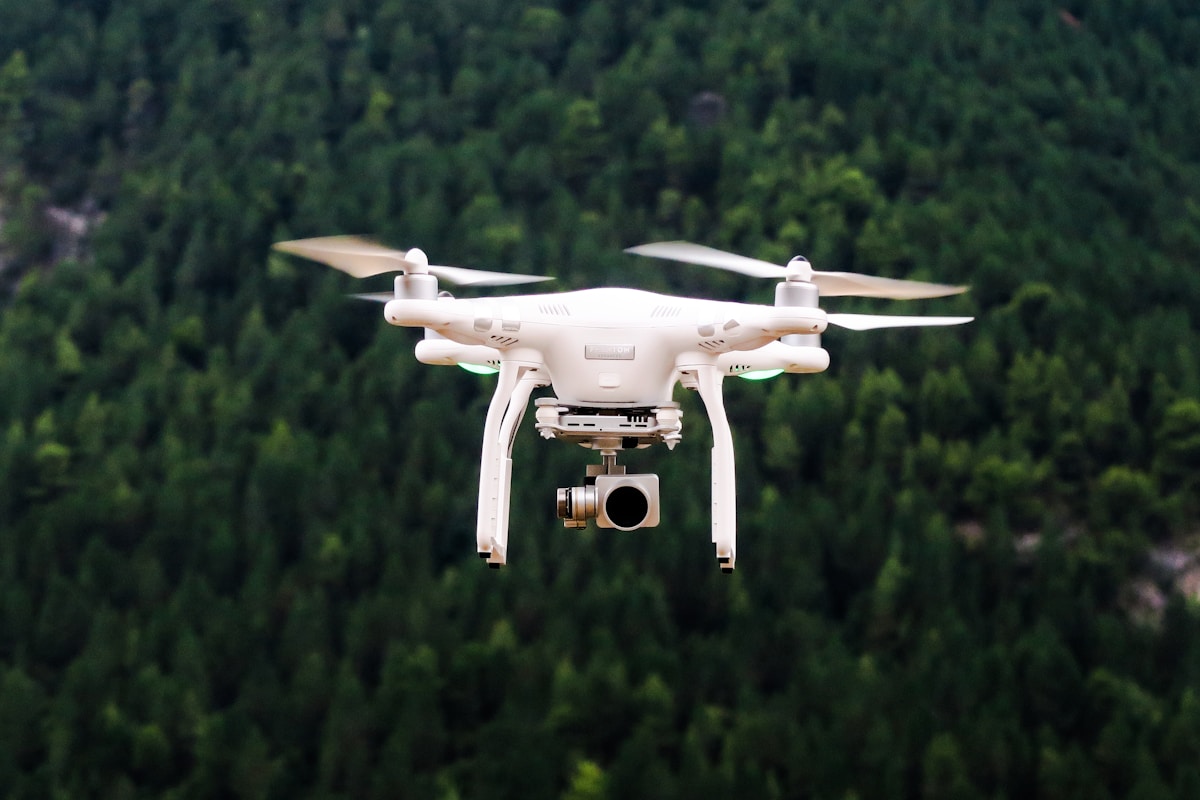
Orthomosaic maps combine hundreds of aerial images into a single, georeferenced image that can be measured and analyzed. These deliverables serve as base maps for project documentation and planning. Export formats typically include GeoTIFF files compatible with CAD and GIS software.
Digital Surface Models (DSMs) and Digital Terrain Models (DTMs) represent the site’s topography in three dimensions. These models support earthwork calculations, drainage analysis, and visualization. Contour maps derived from these models help contractors understand site conditions and plan grading operations.
Point clouds provide dense three-dimensional representations of the site surface. While processing-intensive, point clouds offer maximum flexibility for analysis and can be integrated with BIM (Building Information Modeling) workflows. Construction companies with sophisticated project management systems often request point cloud deliverables.
Progress reports compare current conditions to previous flights or design documents. These reports highlight completed work, identify discrepancies, and support project management decisions. Many contractors want simple visual comparisons rather than technical data, so be prepared to create clear, non-technical presentation materials.
Accuracy and Ground Control Point Requirements
Accuracy requirements vary significantly between projects. Understanding these requirements helps you deploy appropriate equipment and methods while pricing services correctly.
For many progress monitoring and documentation applications, relative accuracy (consistency within the dataset) matters more than absolute accuracy (exact real-world coordinates). A drone equipped with standard GPS can deliver relative accuracy suitable for visual documentation and general measurements.
Survey-grade accuracy requires RTK (Real-Time Kinematic) or PPK (Post-Processed Kinematic) positioning systems, plus ground control points (GCPs) surveyed to known coordinates. This level of accuracy supports earthwork calculations, as-built surveys, and integration with professional survey data. RTK-capable drones like the DJI Matrice 300 RTK or Phantom 4 RTK deliver centimeter-level accuracy when properly calibrated.
Ground control points are physical markers placed on the site and surveyed to precise coordinates. These points appear in aerial imagery and anchor the photogrammetric model to real-world coordinates. Depending on project requirements, GCPs may be established by a licensed surveyor or by the drone operator using survey-grade GPS equipment.
Discuss accuracy requirements with contractors before beginning work. Some applications require licensed surveyor involvement for legal or contractual reasons, while others accept drone-generated data for internal management purposes only.
Progress Monitoring Workflows
Establishing efficient workflows for recurring progress monitoring flights maximizes profitability while ensuring consistent deliverables. Many construction drone businesses focus on this recurring revenue model.
Standardize your flight planning for each site. Use saved mission plans to ensure consistent coverage between flights, which improves comparison accuracy and reduces processing time. Document your standard operating procedures so flights can be completed consistently regardless of which pilot is assigned.
Develop templates for your deliverables that can be quickly populated with new data. Contractors appreciate consistent report formats that allow easy comparison between periods. Include clear annotations highlighting changes and notable conditions.
Establish clear schedules and communication protocols with clients. Many contractors prefer weekly flights on the same day each week, allowing them to integrate drone data into their project management routines. Confirm flight schedules in advance and communicate promptly about weather delays or rescheduling needs.
Safety and Site Access
Construction sites present unique safety challenges that drone pilots must address. Active sites feature moving equipment, overhead hazards, changing conditions, and workers focused on their tasks who may not notice drone operations.
Always coordinate with the site superintendent or project manager before arriving. Understand the site’s safety requirements, including personal protective equipment (PPE) like hard hats, safety vests, and steel-toed boots. Many sites require safety orientation before allowing access.
Plan flights to avoid active work areas when possible. Early morning flights before crews arrive often provide the safest operating conditions while minimizing disruption to construction activities. If flying during active work hours, maintain clear communication with ground personnel and be prepared to land immediately if conditions change.
Establish visual observers when operating near active work areas or in complex airspace. Construction sites often feature cranes and other tall equipment that create obstacle hazards. Never fly over workers, and maintain safe distances from all personnel and equipment.
Pricing Construction Mapping Services
Construction mapping pricing typically follows one of several models: per-acre rates, per-flight rates, or monthly retainer agreements. The right pricing model depends on project characteristics and client preferences.
Per-acre pricing works well for one-time surveys and projects with clearly defined boundaries. Rates typically range from $20 to $50 per acre for basic mapping, with survey-grade accuracy commanding $50 to $150 per acre or more. Factor in mobilization time, GCP placement, and processing time when calculating per-acre rates.
Per-flight pricing simplifies recurring work like weekly progress monitoring. Establish a fixed rate for standard flights, with adjustments for expanded coverage or additional deliverables. Rates of $400 to $1,200 per flight are common for mid-sized commercial projects.
Monthly retainers provide predictable revenue for ongoing relationships. Contractors appreciate fixed monthly costs that simplify budgeting, while pilots benefit from guaranteed work. Structure retainers to include a specified number of flights with clear pricing for additional services.
Software and Processing Tools
Photogrammetry software transforms aerial imagery into usable deliverables. Selecting appropriate tools depends on your volume, accuracy requirements, and client needs.
Cloud-based platforms like DroneDeploy and Pix4D Cloud offer accessible entry points with straightforward workflows. These services handle processing automatically and provide web-based viewing and collaboration tools that clients can access directly. Monthly subscriptions range from $100 to $500 depending on features and processing volume.
Desktop software like Pix4Dmapper, Agisoft Metashape, and DJI Terra provides more control over processing parameters and supports offline work. These tools typically offer one-time purchase or annual subscription options ranging from $300 to $3,500. Processing happens on your local computer, so invest in capable hardware with adequate RAM and storage.
CAD and GIS integration capabilities matter for construction clients. Ensure your workflow can export deliverables in formats compatible with AutoCAD, Civil 3D, Revit, and common GIS platforms. Many contractors work in specific software ecosystems and expect deliverables ready for import into their existing tools.
Invest time learning your chosen software thoroughly. Processing efficiency and output quality improve significantly with experience. Most platforms offer training resources, certification programs, and user communities that can accelerate your learning curve.